Loading...
Serving Jefferson City, MO and surrounding areas. (573) 257-2944
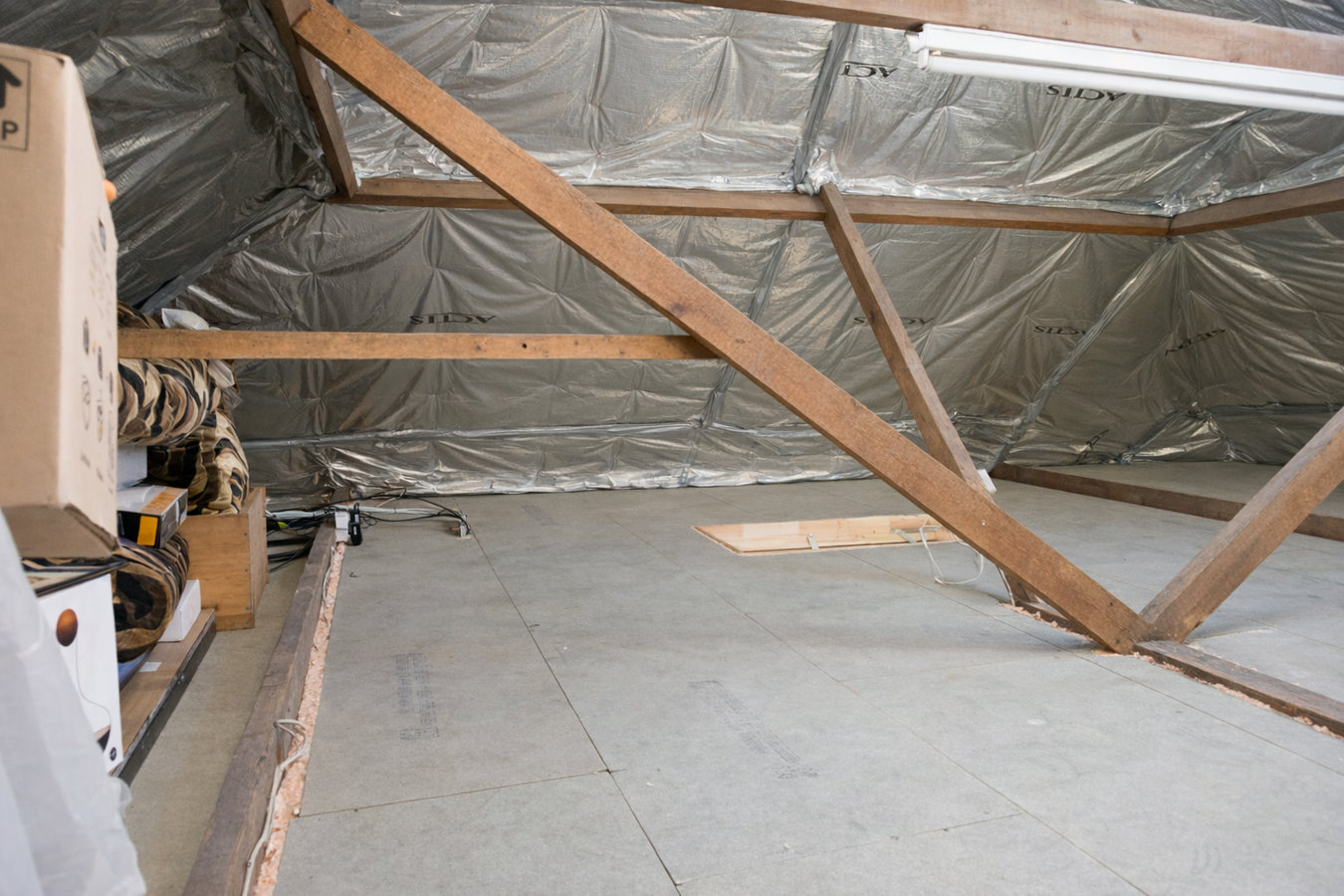
If upstairs rooms are sweltering in summer or freezing in winter, your attic is the problem. We add or upgrade attic insulation so your home stays comfortable and your HVAC runs less.
Attic insulation in Jefferson City should be deep enough to bury the wooden framing beams - most Missouri homes need roughly 13 to 15 inches of blown-in material to meet current recommendations - and a significant share of older local homes fall well short of that. Jefferson City Insulation assesses what you currently have before recommending any work, so you are never sold more than what your home actually needs.
A properly insulated attic also requires air sealing before any material goes in. Gaps around pipes, wiring, and recessed lights let warm air escape through the ceiling and into the attic, where it drives up energy costs and can cause ice dams in winter. We seal those gaps as the first step in every attic insulation job. For homes where the attic shows signs of moisture, we also pair insulation work with our attic air sealing service to address the root cause before adding new material.
The U.S. Department of Energy estimates that proper attic insulation and air sealing can cut heating and cooling costs by up to 15 percent. In a Jefferson City home running through both a hot Missouri summer and a cold Missouri winter, that translates to real money every month.
These signs are especially common in Jefferson City homes built before 1985.
If your energy costs have risen without any obvious change in how you use your home, an under-insulated attic is one of the most common causes in older Missouri homes. Jefferson City's winters and summers both put real demand on HVAC systems, and a poorly insulated attic forces them to run longer than they should.
Upstairs bedrooms or rooms directly below the attic that never quite reach a comfortable temperature are a strong sign the attic is not doing its job. This temperature unevenness is common in Jefferson City homes built before the 1980s, where insulation was often installed unevenly or has settled significantly over decades.
A quick flashlight check of your attic is all it takes. If you can clearly see the tops of the wooden framing beams across the floor, your insulation level is too low. Properly insulated Missouri attics should have enough material to fully cover and bury that framing.
Thick ridges of ice along the edge of your roof during cold stretches mean heat is escaping through your attic and unevenly melting snow. Jefferson City winters are cold enough for this to happen regularly in under-insulated homes, and it can push water under your shingles and into your walls.
We handle attic insulation from the assessment through final installation. Every job starts with measuring what is already in your attic and checking for moisture, damage, or ventilation issues that need to be addressed first. We then seal air leaks around pipes, wires, and fixtures before adding any new material - a step many contractors skip but that makes a real difference in your results. Our blown-in insulation service is commonly used for attic upgrades because it fills around beams and odd corners without leaving the gaps that batts often miss.
For homes where the existing material is damaged, contaminated, or simply inadequate, we also remove old insulation before installing new. We work in attics of every configuration - low-pitch, high-pitch, complex framing, and partially finished spaces. You will get a clear written quote before any work begins, and we will walk you through the finished job before we leave.
Fills around framing and irregular spaces to achieve consistent depth across the entire attic floor.
Closes gaps around pipes, wires, and fixtures before insulation is added, maximizing the benefit of every dollar spent on material.
Adds material to existing insulation that has settled or is simply below the recommended depth for Missouri's climate.
Removes damaged, contaminated, or outdated material before fresh insulation is installed - required when existing conditions would compromise new work.
A thorough look at what is there now, including moisture checks and ventilation review, before any recommendation is made.
We provide the product documentation you need to claim the federal energy efficiency tax credit on qualifying installations.
Jefferson City's climate swings hard in both directions - genuinely cold winters and hot, humid summers. That means your attic insulation has to work year-round, not just in one season. A large share of local homes were built before 1980, when insulation requirements were a fraction of what they are today. If your home is in one of Jefferson City's older neighborhoods - near the Capitol, around Lincoln University, or along the west side of town - the original insulation has had 40 to 60 years to settle, compress, and absorb moisture. What is there now may be doing very little.
Missouri's humidity also creates a moisture risk in attics. Warm, humid summer air meeting cold winter surfaces can cause condensation and mold if ventilation is not right. We check for these conditions as part of every assessment. Homeowners in Sedalia and Warrensburg deal with the same climate challenges and the same aging housing stock - we serve the full central Missouri region and know what to look for in homes at every age.
We ask a few basic questions about your home's age, square footage, and any specific comfort or bill concerns you have noticed. We respond within 1 business day and schedule an in-home visit that works for your schedule.
We go up into your attic and measure what is actually there. We check for moisture, mold, and ventilation issues. You get a written estimate that spells out exactly what work will be done, what materials will be used, and the total cost - before anything is agreed to.
The crew seals air leaks first, then installs or adds insulation to the recommended depth. Work is contained to the attic - your living space stays clean. Most Jefferson City homes are done in a single day. No waiting or curing period when the crew leaves.
We walk you through the finished work and provide documentation of the materials installed - you will need this for the federal tax credit and for your own records. Most homeowners notice their home feels more even within the first few days.
We respond within 1 business day. There is no obligation and no pressure. After you submit, someone from our office will call to schedule a free on-site attic assessment at a time that works for you.
(573) 257-2944Every attic job we complete is handled by an experienced local crew and documented from start to finish. The work meets Missouri's standards for residential insulation, and you get a written record of what was done.
The federal energy efficiency tax credit covers up to 30 percent of qualifying material costs through 2032. We document the products installed so you walk away with what your tax preparer needs to claim every dollar you are entitled to.
A lot of our work is in homes built between the 1940s and 1980s - brick houses near the Capitol, ranch homes on the west side, older neighborhoods around Lincoln University. We know what those attics look like before we arrive.
Adding insulation on top of a leaky attic delivers less improvement than you paid for. We seal gaps around pipes, wires, and fixtures before any material goes in - and we show you the difference it makes in your written assessment.
We do not do phone quotes for attic work because every attic is different - what is up there is what determines what you actually need. A real assessment means a real number. Call us today or submit a request and we will be in touch within one business day.
For recommended insulation levels by climate zone, visit the U.S. Department of Energy insulation guide. For information on Missouri utility rebate programs, the Ameren Missouri Energy Efficiency Programs page is the right starting point.
The most common material for attic top-ups - blown-in coverage fills around irregular framing and reaches corners that batts leave exposed.
Learn moreCloses the gaps and penetrations that let conditioned air escape into your attic - the critical first step before any insulation material is added.
Learn moreFall is the best time to act in Jefferson City - get ahead of the heating season and feel the benefit all winter long.