Loading...
Serving Jefferson City, MO and surrounding areas. (573) 257-2944
Cold floors, rising energy bills, and musty smells often trace back to an uninsulated crawl space. We fix the root cause so your home stays comfortable and dry year-round.
Crawl space insulation in Jefferson City acts as a thermal barrier between the cold or damp ground and your living areas above - most jobs take one to two days and make a noticeable difference in floor temperatures within the first cold snap after installation. Without it, heat escapes through your floors in winter and moisture rises from the ground year-round, driving up your energy bills and creating conditions for mold and wood rot. If you are dealing with an older crawl space that has sagging or wet material already in place, the right first step is often pairing this work with insulation removal to clear out the old material before anything new goes in.
Jefferson City homes face a particular challenge: clay-heavy soil that holds moisture against your foundation, combined with humid summers and cold winters that stress crawl spaces from both directions. Many homes built before 1985 in Jefferson City were constructed with vented crawl spaces that are now understood to pull in more moisture than they release in Missouri's climate.
The U.S. Department of Energy - Crawl Space Insulation guide explains the main approaches and what fits different home types.
If your kitchen or living room floor feels cold underfoot in January despite the heat running, heat is escaping through an uninsulated crawl space below. Jefferson City winters regularly push into the teens, and without a thermal barrier below your floors, that cold transfers straight up into your living space.
A persistent musty or earthy odor - particularly in rooms closest to the ground floor - often signals moisture building up in the crawl space and working its way into your home. Jefferson City's heavy spring rainfall and clay soils push moisture right against your foundation. If the smell gets worse after a rainy stretch, your crawl space is likely the source.
If your energy costs have risen over the past few years without any change in habits or equipment, a failing or absent crawl space insulation system is a likely reason. Insulation that has sagged, gotten wet, or been disturbed by pests loses its ability to slow heat transfer, and your HVAC system compensates by running longer.
If you have ever looked into your crawl space and seen light coming through gaps in the foundation, condensation on pipes or beams, or any standing water on the ground, you have a moisture problem that insulation alone cannot fix - but that needs to be addressed before winter. These are signs the space is not properly sealed.
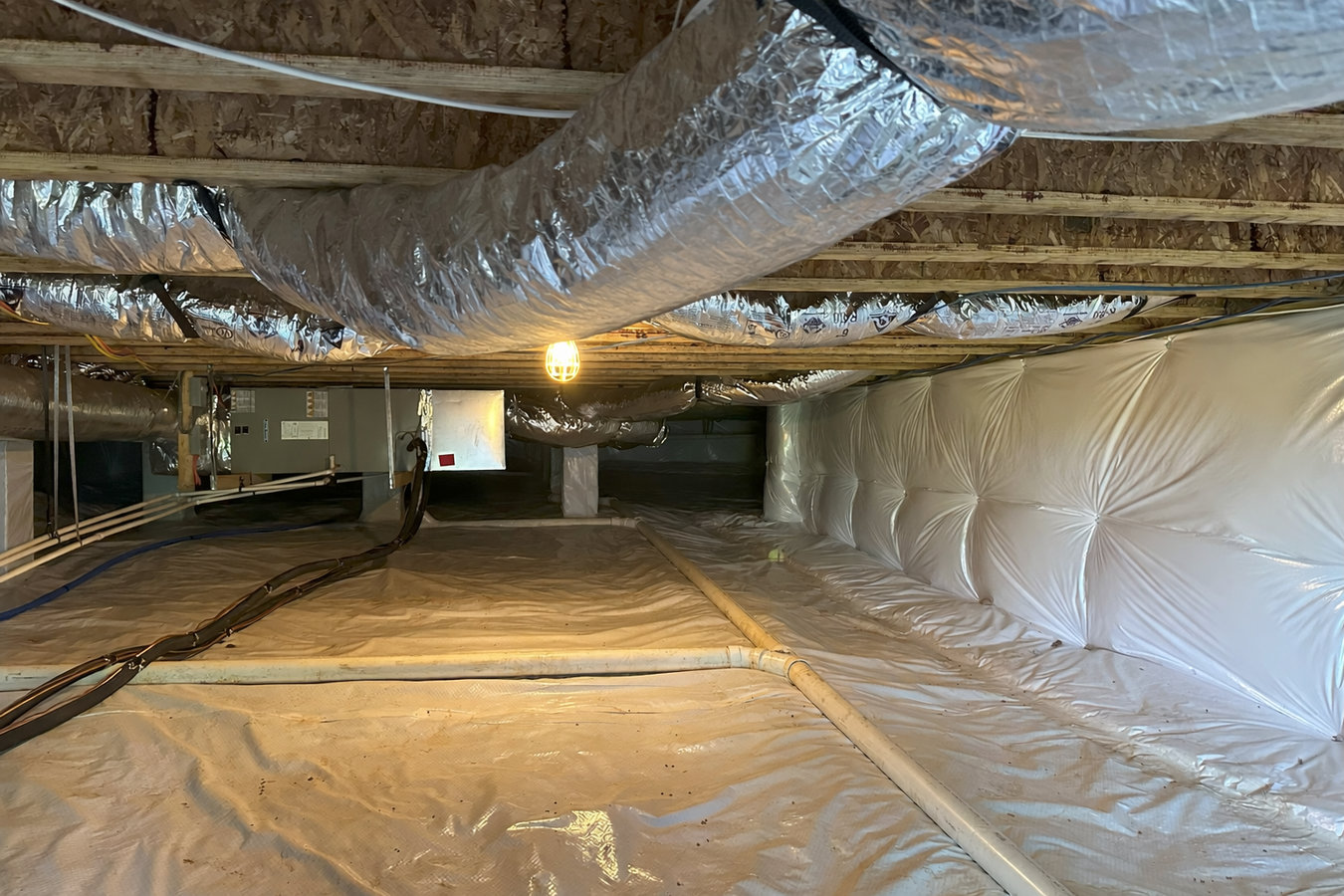
We handle two main approaches to crawl space insulation, and which one fits your home depends on how the space is built and what runs through it. The first is floor joist insulation - placing insulation material between the wooden beams that support your floors. This is a straightforward approach that works well for crawl spaces that are simply empty space with no ductwork or pipes running through them. The second is crawl space encapsulation, where we seal and insulate the walls and floor of the crawl space itself, turning it into a conditioned space that stays dry and temperature-controlled year-round. For homes where moisture is the bigger concern, we often pair insulation with a crawl space vapor barrier - a thick plastic liner laid over the ground to prevent ground moisture from rising into your home.
Every job includes a moisture check before we install anything. Putting insulation in over a wet crawl space traps the problem and makes things worse. We address the moisture source first, then insulate. All work is documented with photos so you can see the finished space without crawling in yourself.
A good fit for crawl spaces with no ductwork or pipes, where the primary goal is stopping heat loss through the floor.
Best for homes where moisture is the main problem - seals walls and floor, and can include a vapor barrier and wall insulation.
An add-on or standalone service for homes where ground moisture is rising into the crawl space and needs to be blocked at the source.
Jefferson City sits on clay-heavy soil that absorbs and holds water rather than draining it away after rain or snowmelt. That moisture lingers near and under your foundation for days after a storm, creating persistent humidity in the crawl space. Combined with Missouri's genuinely cold winters and hot, humid summers, you end up with a space that is under stress in both directions all year. The U.S. Department of Energy estimates that properly insulating and air-sealing a crawl space can reduce energy costs by 10 to 20 percent in many homes - and in Jefferson City's climate, the savings potential is real. For more on how Missouri's soil conditions affect home moisture, the University of Missouri Extension is a reliable local resource.
We serve homeowners throughout Jefferson City and the surrounding region, including Columbia, MO and Fulton, MO. Whether your home is a mid-century ranch on the west side of town or an older brick house near the Capitol, we know the housing stock and what these crawl spaces typically need.
We ask a few basic questions - your address, home size, and whether you have noticed specific problems like cold floors or a musty smell. We respond within 1 business day and schedule an estimate visit at your convenience.
A technician visits your home and physically checks the crawl space - size, existing insulation condition, moisture signs, and access. The visit typically takes 30 to 60 minutes. You receive a plain-language summary of what was found and a written estimate.
The crew enters the crawl space and completes the work - insulation, vapor barrier if included, and sealing any gaps. Most jobs finish in a single day. You can stay in your home throughout. The crew lays down protective coverings to keep your floors clean.
Before leaving, the crew walks you through what was done and often provides photos of the finished crawl space. If a permit inspection is required, we coordinate that with the city. Within a few weeks, you should notice the difference in floor temperatures.
We respond within 1 business day. No obligation, no pressure. After you submit, someone from our office will call to schedule a free in-person estimate so we can see your crawl space and give you an accurate, written quote.
(573) 257-2944We inspect for standing water, condensation, and mold before recommending an insulation approach. Installing over a wet crawl space traps the problem - we address moisture first, insulate second. That order of operations protects your home and the insulation investment.
We cover Jefferson City and a 12-city service area throughout central Missouri, including Columbia, Fulton, and Warrensburg. Local work means we understand the clay soils, older housing stock, and seasonal moisture patterns that shape crawl space conditions here.
The best time to insulate a crawl space in Jefferson City is fall, when humidity is lower and the space is at its driest. We schedule year-round and can often get to you faster in fall than during the busy spring season. Locking in a fall date means starting winter with a properly insulated crawl space.
Most homeowners will not crawl into their own crawl space to verify the work. We provide photos of the finished installation before we leave so you have a record of what was done - not just a contractor's word that it looks right.
Every crawl space job we take on starts with an honest assessment and ends with documented results. That is the standard we hold ourselves to on every project across Jefferson City and the surrounding communities.
The Insulation Contractors Association of America outlines professional standards for insulation work, including crawl space installation.
Complete your home's thermal envelope by adding insulation to exterior walls, stopping heat loss from every direction.
Learn moreA heavy-duty ground liner that stops moisture from rising out of the soil and into your crawl space - often installed alongside insulation.
Learn moreJefferson City winters do not wait - call us today and lock in your installation date while fall scheduling is still open.